Product Detail
How to Choose the Right Stacking Rack
The Importance of Choosing the Right Stacking Racks
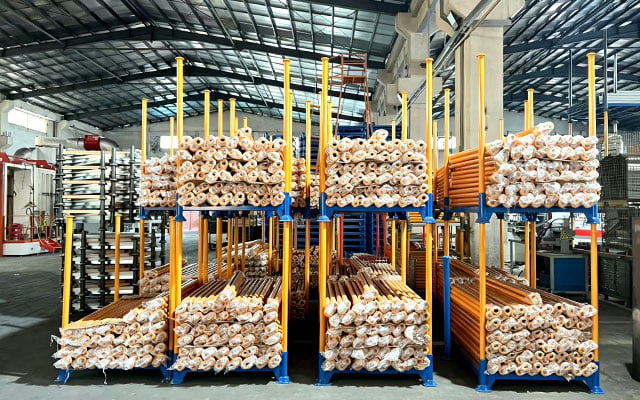
Choosing the right stacking racks is crucial for safe storage, efficient space utilization, and long-term warehouse performance. Unlike fixed racking systems, stacking racks can be placed directly on the warehouse floor and stacked vertically when loaded correctly. This makes them ideal for warehouses that require flexible storage of pallets, components, tires, pipes, fabric rolls, and other industrial products.
On This Page
Table of Contents
The right stacking rack isn’t simply the largest or strongest model available. Rack dimensions, load capacity, stacking height, frame design, access requirements, and storage environment must all be suited to your specific application.
Consider the Type and Size of the Load
The first step is to understand what you plan to store.
Different products require different rack dimensions and structural designs. Before selecting a stacking rack, measure the overall dimensions of the loads, including their length, width, height, and packaging.
For palletized goods, consider the pallet dimensions as well as how the goods will be positioned on the rack.
For tires, the rack should provide sufficient width and height to accommodate the tire size and quantity.
Pipes, fabric rolls, metal parts, and other irregularly shaped products may require specialized support structures.
You should consider:
* Load length and width
* Load height
* Weight per unit
* Number of units to be placed on each rack
* Load shape and stability
* Whether the load is palletized or loose
* How the load will be placed and removed
The racks should provide sufficient clearance for loading and unloading without creating unnecessary unused space.
Determine the Required Load Capacity
Load capacity is one of the most important factors when selecting stacking racks.
You should calculate the maximum weight a rack needs to support under normal operating conditions. Do not select racks based solely on the average load weight. Consider the heaviest anticipated load and allow for an appropriate safety margin.
For example, if a rack typically stores 1,000 kilograms of goods, you should not simply select a rack based on a 1,000-kilogram rating. The actual design should take into account expected operating conditions, load distribution, stacking configurations, and handling methods.
When discussing load capacity with the manufacturer, provide the following:
* Maximum load weight
* Number of loads per rack
* Load distribution
* Required stacking height
* Loading and unloading methods
* Forklift type
Properly selecting the load capacity helps prevent deformation, instability, and premature damage.
Select the Correct Rack Dimensions
The external dimensions of the racking should match your goods and the available warehouse space.
Racks that are too small may not safely accommodate the load, while racks that are too large may waste valuable floor space.
Common dimensions to consider include:
Length: Determines how much horizontal storage space is available.
Width or Depth: Should provide sufficient support for the load while remaining compatible with the warehouse layout.
Height: Affects vertical storage capacity and maximum stacking height.
When selecting dimensions, also consider the clearance required for forklifts and the space between adjacent storage areas.
If your products have non-standard dimensions, custom racking typically offers better space utilization than standard-sized options.
Consider the Required Stacking Height
One of the main advantages of racking is the ability to utilize vertical warehouse space.
However, the maximum stacking height should be determined carefully. It depends on the rack structure, load weight, rack dimensions, warehouse ceiling height, forklift capacity, and the stability of the stacked units.
Before selecting a rack, determine the following:
* Available warehouse ceiling height
* Number of rack tiers required
* Maximum safe stacking height
* Forklift lift height
* Load stability
* Clearance required above the top load
Do not assume that a sturdier rack automatically means it can be stacked to any height. The entire storage configuration must be evaluated as a whole.
Selecting the Right Rack Structure
Stacking racks come in different structural configurations.
Fixed stacking racks feature a rigid structure and are suitable for applications requiring frequent rack use. Foldable or collapsible designs are particularly useful when empty racks need to be returned, transported, or stored.
Depending on the application, you may also need different support structures or accessories.
For example:
Fixed stacking racks: Suitable for general heavy-duty storage.
Foldable stacking racks: Useful when you need to reduce the volume of empty racks.
Racks with removable uprights: Reduce the volume of empty racks and flexibly accommodate goods of different sizes.
Specialized stacking racks: Designed specifically for tires, pipes, coiled materials, or other specific products.
The choice of rack structure should be based on the products being stored and how the racks will be handled.
Consider Warehouse Layout
The best racking system isn’t necessarily the one with the highest load capacity; it should also integrate efficiently into your existing warehouse layout.
Consider the relationships between rack dimensions, storage areas, aisles, loading/unloading zones, doors, columns, walls, and other equipment.
A good layout should provide:
* Efficient use of floor space
* Ample space for forklift operations
* Easy access to stored goods
* Stable stacking areas
* Clear traffic routes
* Appropriate loading and unloading areas
If you plan to replace floor storage with stacking racks, compare the available storage capacity before and after the conversion—don’t just focus on the rack dimensions.
Consider Storage for Unused Racks
If stacking racks need to be removed from service frequently, consider transportation and storage requirements for unused racks before purchasing.
Foldable or collapsible stacking racks can reduce the space required when not in use. This is particularly important for warehouses with significant inventory fluctuations or those that need to reuse packaging.
For example, if 100 racks are needed during peak periods but only 50 are required during normal operations, reducing the floor space occupied by idle racks can yield significant logistical benefits.
Consider Future Storage Needs
Your current storage needs may not remain constant.
If your product dimensions, inventory levels, or warehouse layout are likely to change in the future, consider a racking configuration that offers reasonable flexibility.
Ask yourself:
* Will the products being stored change?
* Will load weights increase?
* Will storage capacity increase?
* Will the racks need to be relocated?
* Will different products use the same racks?
* Will the warehouse layout change?
A flexible stacking rack design can help you adapt more easily to changing storage needs without having to replace the entire racking system.
How to Choose the Right Stacking Racks: A Quick Guide
| Factor | Key Considerations |
|---|---|
| Load Type | Pallets, tires, pipes, fabric rolls, parts, etc. |
| Load Dimensions | Length, width, height |
| Load Weight | Maximum load capacity per rack |
| Rack Dimensions | Length, width, height |
| Stacking Height | Planned number of stacked rack levels |
| Forklift | Type, load capacity, fork dimensions, and lift height |
| Structure | Fixed, foldable, removable‑upright, or custom |
| Surface Treatment | Powder Coating, Paint, or Galvanized |
| Operating Environment | Standard Warehouse, Cold Storage, Humid Environment, or Outdoor |
| Storage Frequency | Long‑Term Storage, Seasonal Storage, or Frequent Handling |
| Future Requirements | Changes in Products, Storage Volume, or Layout |
Selecting the right stacking rack cannot be based solely on dimensions or load capacity. The optimal configuration should be tailored to your products, warehouse layout, material handling equipment, stacking requirements, and operating environment.
If you’re unsure which stacking rack configuration is right for your application, please provide us with the dimensions and weight of the loads, warehouse conditions, forklift specifications, and the quantity required. Our team can then offer recommendations for stacking racks based on your specific storage needs—including dimensions, load capacity, structure, surface treatment, and custom configurations.